Published on: March 30, 2026
Author: Admin
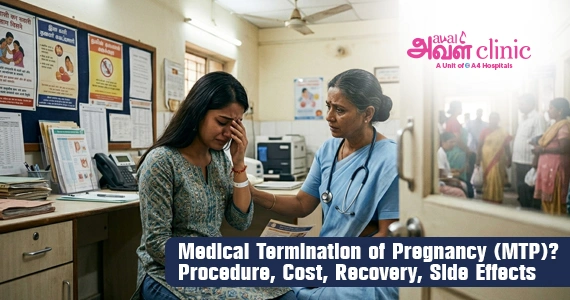
Medical termination of pregnancy (MTP) is widely known as an abortion. What is abortion? It is a process of ending a pregnancy with the help of a qualified medical professional.
Even though pregnancy is a cherishable moment, people may sometimes have to terminate it due to certain medically necessary reasons. These reasons may generally include the identified abnormalities in the developing fetus, the health of the pregnant woman, or other personal circumstances.
What is Medical Termination of Pregnancy (MTP)?
The term MTP full form in medical context refers to the medical termination of pregnancy. It is a procedure carried out to terminate an early pregnancy by using either medication or surgery. Generally, a gynaecologist or an obstetrician with specific experience performs the procedure. MTP is otherwise known as an induced abortion.
Is Medical Termination of Pregnancy Legal in India?
When we say abortion, the first thing that might come into your mind is “Is MTP legal in India?”. Yes, of course. Medical termination of pregnancy is legal in India, under the MTP Act 1971. However, the procedure is permitted only when the gestation is within 20 weeks of pregnancy for most cases. In some scenarios, it can be up to 24 weeks, according to the 2021 amendment.
The MTP Act in India has certain conditions and regulations under which the procedure is permitted. For instance, to carry out MTP for 20 weeks of pregnancy, one qualified healthcare provider’s opinion would be sufficient. Whereas, for 24 weeks of pregnancy, two qualified providers’ opinions are required.
Note: It is essential to understand that medical termination of pregnancy is illegal in India only if the procedure is based on the sex of the fetus.
Where to Get an MTP?
- You can get an MTP at any private clinic or government hospital that is registered under the MTP Act.
- The MTP procedure must be carried out only by a registered medical provider. If an inexperienced or unqualified person performs, it can be considered illegal.
Why is MTP Performed?
MTP abortion can be carried out for several reasons. The following are the potential factors why someone may choose it.
- Accidental pregnancy from rape or contraceptive failure,
- If the pregnancy is suspected to be a threat to the mother’s health,
- If the fetus is identified with incurable diseases, deformities, or genetic abnormalities, or
- Failed to expel the complete pregnancy tissues from the natural miscarriage.
All of which may demand the MTP to be carried out.
How is the MTP Performed?
Induced abortion or MTP may usually be performed in two different ways. They may include:
Medical Abortion (MTP kit)
Medical abortion involves ending the pregnancy between 7 and 10 weeks by using a combination of medications, often mifepristone followed by misoprostol. These medications are prescribed by the healthcare provider after doing a complete examination, including the determination of gestational age through ultrasounds. Medical abortion is sometimes referred to as the MTP kit procedure.
- First medication
The first medication to take would generally be mifepristone. This acts as an anti-progestin that interferes with the effects of the progesterone hormone, which is essential for maintaining the pregnancy. - Second medication
The second medication would be misoprostol. You will often be advised to take this pill typically between 24 and 48 hours after taking mifepristone. Within hours of taking the pill, you will likely experience heavy bleeding similar to your periods. This can happen as the medication triggers the uterine contractions, which force the pregnancy tissues to expel through the vagina. - Follow-up consultation
The follow-up consultation may be scheduled once the bleeding lightens. This can help the healthcare provider ensure that the pregnancy tissue has been expelled completely and the patient is healing properly.
Surgical Abortion
Surgical abortion is the procedure performed to remove the pregnancy from the uterus. For pregnancies beyond 12 weeks, procedures like vacuum aspiration and dilation and curettage (D&C) are used. Anaesthesia is usually administered during the procedure to ensure the patient is comfortable.
- Vacuum Aspiration
Vacuum aspiration involves removing the pregnancy using a suction device up to 12 to 14 weeks. The procedure is frequently done under local anaesthesia and pain relievers. The patient can go home the same day of the MTP procedure after a few hours of recovery in the facility. However, having someone to drive them home is recommended. - Dilation and Curettage (D&C)
Dilation and Curettage (D&C) involves dilating the cervix for a short time to easily access the uterus. Once dilated (the cervix is open), a healthcare provider removes the pregnancy using a curette, which scrapes the tissue from the uterine lining. The procedure is commonly done in the early second trimester, involving general anaesthesia or sedation.
What to Expect During and After a Medical Termination of Pregnancy?
Even though the medical termination of pregnancy definition is a safe process of removing pregnancy, it does impact both the physical and mental health of the mother. By understanding what to expect during and after the procedure, you can reduce anxiety and facilitate a smoother recovery.
Here comes what you can expect regarding the medical termination of pregnancy (MTP).
During the procedure
- Cramping and bleeding
Following the MTP procedure, you can expect strong period-like cramps along with heavy bleeding and blood clots. These can happen as a process of expelling the pregnancy tissues from the body. - Temporary side effects
You may also experience certain temporary side effects due to medications. The side effects may include chills, fever, diarrhoea, vomiting, nausea, and dizziness. - Pain management
You may also be prescribed pain-relieving medications like ibuprofen to manage your cramps.
After the procedure
- Continued bleeding
The bleeding may continue for several days to weeks. It may usually lighten after a few days. But some people may notice spotting until their next period, which is normal. - Gradual symptom resolution
As your body recovers over time, bleeding may lighten along with temporary side effects like fever. - Follow-up appointment
A follow-up appointment may be scheduled to confirm that the pregnancy tissues are expelled completely through blood tests and ultrasounds.
Book Your Free Online Consultation
Call Now: 80047 80048What are the Common Side Effects of MTP?
Medical Termination of Pregnancy (MTP) is generally the safest and one of the effective procedures if performed by an experienced healthcare provider, as in Aval Clinics. However, as with any medical procedure, MTP also has certain side effects. These side effects are often manageable with medical care.
The common side effects of MTP, whether surgical or medical (pills) may include:
Incomplete Abortion
The residuals from the aborted pregnancy can cause complications like infection and pelvic pain. Failing to diagnose or treat properly can lead to more severe complications like infertility. Sometimes, it can also lead to sepsis, even though it is rare. This can necessitate an additional surgical procedure (uterine aspiration / D&C) or medication.
Heavy Bleeding (Haemorrhage)
Heavy bleeding can be said as the real side effects of MTP meaning. The procedure can cause continuous and heavy bleeding that soaks a thick sanitary pad within an hour.
Infection
Though rare, the untreated remains from the aborted pregnancy can cause infection with symptoms like fever, severe abdominal pain, or foul-smelling vaginal discharge.
Allergic Reaction
Some people may develop allergic reactions to certain medications used in the procedure.
Emotional Impact
It is normal to experience a range of emotions during and after the MTP procedure. The emotions may particularly include sadness and guilt. These emotional responses can happen due to the sudden hormonal changes, which can subside over a few days to a couple of weeks.
Recovery From a Medical Termination of Pregnancy (MTP)
Recovery from a MTP in pregnancy may include physical healing, like bleeding and cramping, to emotional healing, like relief and sadness. To navigate the process, the requirement for self-care and support from loved ones is important.
Given below are the essential steps recommended for smooth recovery.
Physical recovery
- Bleeding and cramping
Vaginal bleeding and cramping due to the induced abortion may generally last for a few weeks. It is recommended to use sanitary pads instead of tampons, as they can help to monitor your bleeding patterns. - Rest
Resting adequately is important to help the body recover to its pre-pregnancy state. Avoiding intense workouts like heavy lifting is also important. - Infection prevention
Avoid having penetrative sex until your provider recommends. This can help to prevent infections. - Pain management
You can try using a hot water bottle or heating pads to ease the cramps. You can also use over-the-counter pain-relieving pills with the doctor’s advice. - Follow-up
Make sure to visit the healthcare provider when the appointment is scheduled. This can help to ensure that the procedure was successful. Also, make sure to talk about any health concerns or unusual symptoms you experience. This can help with further diagnosis and medical care.
Emotional recovery
- Blended emotions
After an induced abortion, it is common to experience a mixture of emotions. They may generally range from guilt and sadness to relief and happiness. Hormonal changes are the ones to be blamed for this cause, which can subside over a few days to a couple of weeks. - Seek support
Never hesitate to seek emotional support from your non-judgmental circle. This can help to process your feelings significantly. - Contact a doctor
Seek the professional’s help if the negative emotions after an abortion are persistent. This can largely help to change your perspective.
General self-care
- Stay hydrated and nourished
Eating a balanced diet and keeping yourself well-hydrated can be a game-changer when it comes to fighting temporary side effects and weakness. - Contraceptive counselling
After the procedure, you are likely to ovulate before your first period. Ensure to use the prescribed contraceptives to avoid unplanned pregnancies. - Listen to your body
Listening to your body is crucial, especially after an induced abortion. Pushing yourself harder can lead to complications like heavy and prolonged bleeding and severe pain. Your body needs sufficient time to recover from the changes it has undergone.
What is the Cost of an MTP Procedure?
The cost of MTP (Medical Termination of Pregnancy) may typically depend on the type of procedure. Surgical methods are usually expensive when compared to medical abortions. The type of procedure is chosen by the healthcare provider after determining the gestational age of the fetus. The cost is also influenced by the hospital you choose and the expertise of the medical professional performing the procedure.
However, listed below is the approximate cost of the MTP procedure by type.
Medical abortion (pills)
For medical abortions, the cost can range anywhere between ₹3,000 and ₹8,000.
Dilation & Curettage (D&C)
The cost of D&C may range approximately between ₹12,000 and ₹18,000.
Dilation & Evacuation (D&E)
If the gestation of the pregnancy has gone beyond 12 weeks, this procedure can cost anywhere between ₹18,000 and ₹25,000.
Late-term MTP
Prices for late-term abortion can be expensive than other procedures as they require hospitalisation. The cost can range from ₹30,000 to ₹45,000.
The pricing details provided above are approximate and subject to change depending on the individual’s conditions.
For more accurate details, visit our facility.
Summary
MTP full form is a medical termination of pregnancy. MTIs are considered to be the effective and safest methods when it comes to ending an early pregnancy. It can be even safer when a qualified medical professional performs it.
Choosing to do MTP is a highly personal choice. However, understanding the effectiveness of the procedure, complications associated, and knowledge about available options can help to make informed decisions during the consultation with a healthcare provider.
If you still have any concerns, having a consultation with experts at Aval Clinics is recommended. They can guide you.
Contact us today for expert advice and personalized care: